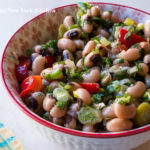

Hard-Boiled Eggs
Banish the greenish ring! This harmless, but unsightly discoloration that sometimes forms around hard-boiled yolks results from a reaction between sulfur in the egg white and iron in the yolk. It occurs when eggs have been cooked for too long or at too high a temperature. The method of cooking eggs in hot, not boiling water, and then cooling immediately, minimizes this from happening.
Food safety precaution: Piercing shells before cooking is NOT recommended. If not sterile, the piercer or needle can introduce bacteria into the egg. Also, piercing creates hairline cracks in the shell, through which bacteria can enter after cooking.
Never microwave eggs in shells. Steam builds up too quickly inside and eggs are likely to explode.
Very fresh eggs can be difficult to peel. To ensure easily peeled eggs, buy and refrigerate them a week to 10 days in advance of cooking. This brief “breather” allows the eggs time to take in air, which helps separate the membranes from the shell.
Hard-boiled eggs are easiest to peel right after cooling. Cooling causes the egg to contract slightly in the shell.
To peel a hard-boiled egg gently tap the egg on your countertop until the shell is finely cracked all over. Roll the egg between hands to loosen the shell. Start peeling at the large end, holding the egg under cold running water to help ease the shell off.
Storage: In the shell, hard-boiled eggs can be refrigerated safely up to one week. Refrigerate in their original carton to prevent odor absorption. Once peeled, eggs should be eaten that day.
High altitude cooking: It’s almost impossible to hard-cook eggs above 10,000 feet.
“Work With What You Got!”
© Victoria Hart Glavin Tiny New York Kitchen All Rights Reserved

Joshua Ozersky, famed food writer for Esquire, dead at 47
Famed Esquire food writer and longtime New Yorker Joshua Ozersky was found dead in a Chicago hotel Monday morning, while he was in the Windy City reporting on the James Beard Foundation Awards for culinary achievements and writing.
He was pronounced dead at 11:40 a.m. in the Conrad Chicago Hotel, and the cause of death is still unknown, the medical examiner’s office said.
The 47-year-old Ozersky, who recently relocated to Portland, Ore., founded Meatopia, an annual carnivore celebration that traveled the nation. Himself a James Beard Foundation advisory board member, he became Esquire’s restaurant editor at large last year. He was due back in Portland on Tuesday once the awards ceremony was done.
The day before his death, he took to Twitter to ask for advice on what turned out to be one of his last meals. “So I am in Chicago. Where should I eat?” he tweeted.
OpenTable marketer Jen Pelka tweeted Monday she was “singing karaoke” with the fallen foodie “until the wee hours last night,” and posted a video of him belting out “Islands in the Stream.”
The happily hefty Ozersky spent much of his career in New York, and one of his several popular food books was the juicy local manual “Meat Me in Manhattan: A Carnivore’s Guide to New York City” in 2003. He also founded New York magazine’s food blog, Grub Street, and hosted for the Smithsonian TV special “The United States of Booze” last year.
His death brought an onslaught of online grieving from fellow foodies and journalism colleagues.
“If Josh Ozersky had been dropped into any other place & century–Paris in 1890, London in 1750, Beijing in 1480–Within six months he would have been at the center of the food scene, propelled by his opinions and his love of toppling icons,” New York Times food critic Pete Wells tweeted.
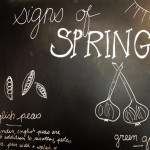
One swallow does not make a spring.
Bluebirds are a sign of spring; warm weather and gentle south breezes they bring.
In spring, no one thinks of the snow that fell last year.
Don’t say that spring has come until you can put your foot on nine daisies.
Spring-time sweet!
The whole Earth smiles, thy coming to greet.

Happy May Day! For me, growing up in the Midwest, May Day was always a special day. It was the first day that I was allowed to go barefoot, which meant the beginning of summer fun. The pavement was still always a bit chilly, but I didn’t care because it meant summer freedom. On May Day it was customary to make homemade May baskets, which consisted of large Dixie cups filled with popcorn, gumdrops, and lilacs that were fastened with colorful pipe cleaners. I would take dozens of May baskets to my neighborhood friends’ doorsteps, ring doorbells, and run away. When I returned to my own home there would be similar baskets on my doorstep that my friends had delivered to me as well. At school we would dance around the May pole and sing songs. It was always fun to dance, and sing, and wrap the colored ribbons around the pole. So, for me, today is a special day to remember beautiful childhood memories that will forever live in my heart.
“Work With What You Got!”
© Victoria Hart Glavin Tiny New York Kitchen All Rights Reserved
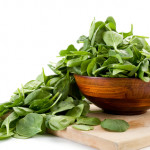
Fresh Spinach
Spinach is available year round, but is especially sweet and tender in the late spring, when growing conditions are perfect.
Spinach is so versatile; you can eat it for breakfast, lunch, dinner, and dessert! In Tuscany, the leaves are baked into a pie with almonds, sugar, and candied lemon peel called torta co’bischeri agli spinaci. Leave it to the Italians to create a spinach dessert.
http://www.npr.org/2013/03/28/175478107/tuscan-pie-a-sweet-springtime-take-on-spinach
When shopping for spinach the leaves should be crisp and free of moisture. Avoid spinach with broken or bruised leaves.
If you purchase bagged greens (yes, I know there is a big controversy on bagged greens) they will most likely last twice as long as the leafy bundles. Bagged spinach is handled less and exposed to less moisture. Make sure to check the “best by” date to use the leaves when they are at their peek. If they are dark or clump together, just pass them by.
Spinach grows in sandy soil, so if you by bundled spinach it most definitely won’t be prewashed. Just give the leaves a generous soak in cold water, changing it out once or twice, until there is no more grit in the bottom of the bowl.
To Prepare Spinach (1 Pound): Wash and drain. Remove stems and tear into pieces (12 cups torn).
Conventional Cooking Directions: Cook, covered, in a small amount of boiling salted water for 3 to 5 minutes or until tender. Begin timing when steam foams. OR steam for 3 to 5 minutes. Microwave cooking is not recommended.
How To Store: Rinse leaves in cold water and thoroughly dry. Place leaves in a storage container with a paper towel and refrigerate for up to 3 days.
Baby Spinach isn’t actually immature flat-leaf spinach, but a different variety entirely.
Flat-Leaf Spinach has large leaves that turn silky once slow cooked. They have an earthy flavor that tastes great in dishes like lasagna or soup.
It takes 8 cups of raw spinach to make just 1 cup of cooked. Make sure that you have enough spinach for your recipe.
Raw spinach has 33 percent more folate and 187 percent more vitamin C than cooked, since those nutrients are vulnerable to heat. On the flip side, cooking spinach deactivates oxalic acid, a compound that prevents the absorption of certain nutrients, so you get 32 percent more iron and nearly 40 percent more calcium than raw. Have a salad today and sauté tomorrow.
“Work With What You Got!”
© Victoria Hart Glavin Tiny New York Kitchen All Rights Reserved
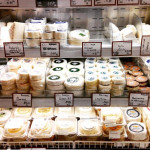
One thing that impressed me about Eataly was the nice assortment of cheeses. Everything looked so good that I wanted to buy one of each.
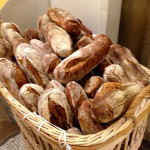
The best Eataly that I’ve been to was in Rome, but the one in New York City is nice too. It’s usually full of tourists taking photos, but it’s still fun to take a little trip to see what products are available. Today I was there looking for a special Italian salami that, unfortunately, they didn’t have. May of the fresh items looked delicious and the breads are made on premises.

“Nothing great was ever achieved without enthusiasm.”
– Ralph Waldo Emerson

This afternoon I was out & about picking up various birthday gifts here in the city. I was near Rockefeller Center and ducked into Anthropology where I stumbled upon my friend Hillary Davis’ French Comfort Food cookbook. I was delighted to see her beautiful book in the store. Hillary has several cookbooks out and all are wonderful.

Rainy Day Here In Connecticut, But The Daffodils Are In Full Bloom